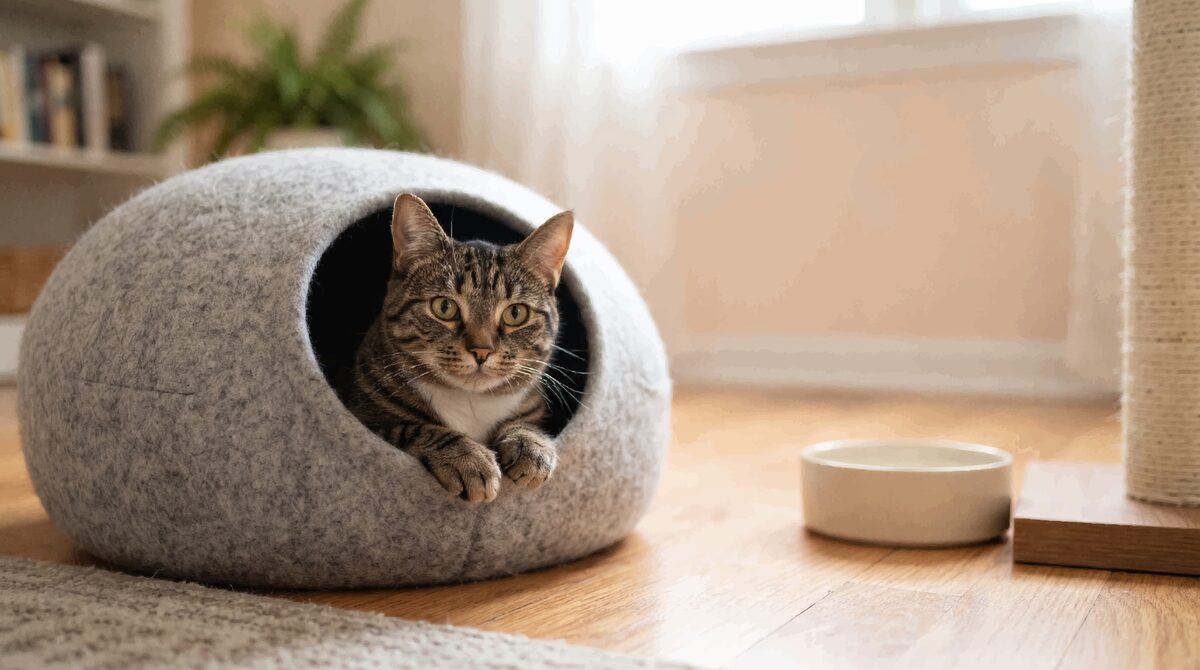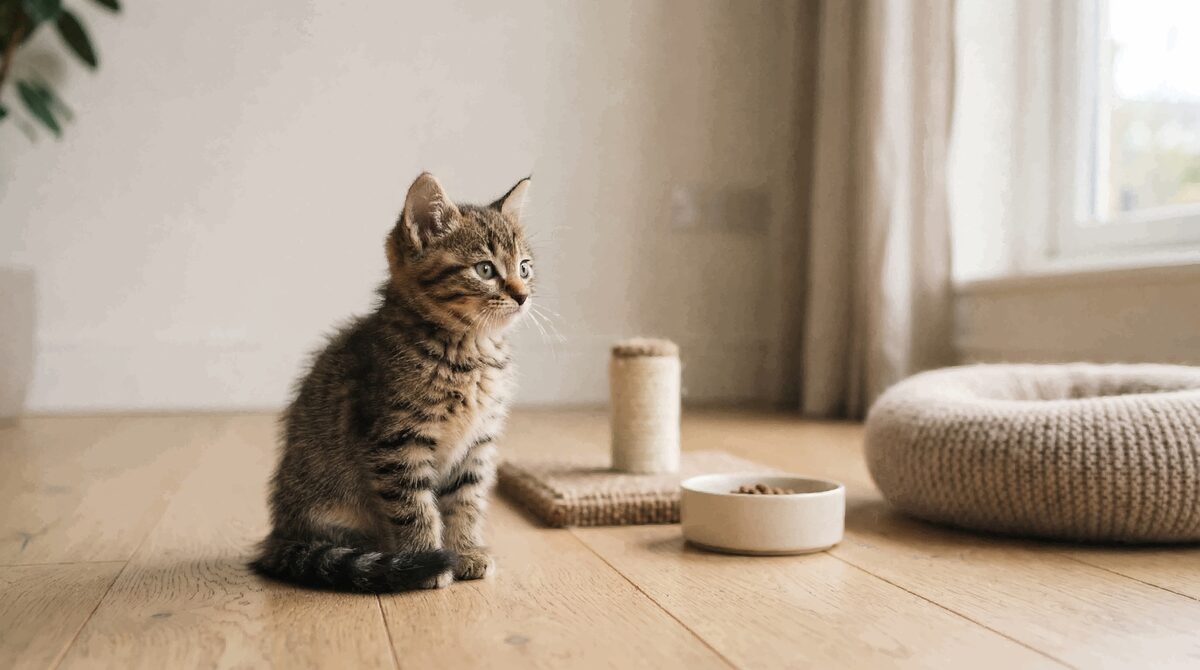
A kitten doesn't need much to be happy, but the few things they do need matter, and it's far easier to have them ready before your kitten comes home than to run to the store on the first night. This checklist covers what to buy, what to leave on the shelf, how to make your home safe for a small and very curious climber, and what the first vet visits usually involve.
1. The Quick Checklist
If you only want the shopping list, here it is. Each item is explained further down.
- Food: kitten food (the same brand they eat now, to start), plus a shallow food bowl and a water bowl.
- Litter: a low-sided litter box, unscented litter and a scoop.
- Travel: a sturdy cat carrier.
- Rest: a soft bed and at least one hiding spot.
- Scratching and climbing: a tall, sturdy scratching post, and a cat tree if you have room.
- Play: a wand toy and a few small toys they can carry and chase.
- Grooming: a soft brush, cat nail clippers, and a cat toothbrush with cat toothpaste.
- ID: a breakaway collar with a tag, and a registered microchip.
- Cleanup: an enzyme cleaner for accidents.
Costs vary a lot by area and by what you choose. A basic starter set often lands somewhere between about $150 and $300, and the first year of vet care adds more on top. You don't need the most expensive version of anything on this list.
2. Questions to Ask Before You Shop
Whether your kitten is coming from a shelter, a rescue or a friend's litter, a few answers will save you buying the wrong things:
- How old is the kitten? Most kittens go to new homes at around 8 weeks or older. Younger kittens need extra care, so ask a vet if yours is younger than that.
- What food are they eating now? Write down the brand and whether it's wet, dry or both.
- What litter are they used to? Kittens learn quickly, but a familiar litter makes the first days easier.
- Which vaccines and treatments have they had? Ask for the records, including deworming and flea treatment.
- Are they spayed or neutered, and microchipped? Shelter kittens often are already. If so, ask for the microchip number.
If you're adopting from a shelter, our guide to adopting a dog or cat from a shelter explains the application, the fees and what they usually cover.
3. Food and Water
Kittens grow fast and need food made for growth. Look for a label that says the food is complete and balanced for growth or for all life stages. Most vets suggest staying on kitten food until around a year old.
- Start with what they already eat. A sudden change of food can upset a kitten's stomach. If you want to switch, mix the new food in gradually over about a week.
- Small meals, several times a day. Young kittens have small stomachs, so three or four small meals a day is common. Your vet can tell you how much for your kitten's age and weight.
- Shallow bowls. Wide, shallow dishes are easier for a small face. Ceramic or stainless steel bowls are easy to keep clean.
- Fresh water, always. Keep the water bowl a little apart from the food. Some cats drink more from a water fountain, but a clean bowl works fine.
Skip the saucer of milk. Once kittens are weaned, many can't digest cow's milk well, and it can cause diarrhea. Water is all they need to drink. It's also worth learning which human foods are toxic to cats before anyone starts sharing their dinner.
4. The Litter Box Setup
Most kittens already know what a litter box is for. Your job is to make it easy to find and pleasant to use.
- A low-sided box. Small legs can't climb into a tall box. A shallow box, or even a baking tray to start, is easier. You can move to a full-size box as they grow.
- Unscented litter. Strong scents can put cats off the box. Some vets suggest non-clumping litter for very young kittens, who sometimes taste it, so ask your vet if you're unsure.
- A quiet, easy-to-reach spot. Away from the food and water, and away from loud machines like the washer. At first, keep it close to where your kitten spends most of their time.
- Enough boxes. A common rule is one box per cat, plus one. In a large home, a kitten may need a box on each floor while they're learning.
- Scoop every day. A dirty box is one of the most common reasons a cat goes elsewhere.
Keep an enzyme cleaner on hand. Accidents happen while a kitten learns the layout of a new home. Ordinary cleaners can leave a smell your kitten still notices, which draws them back to the same spot.
5. A Carrier, a Bed and Somewhere to Hide
- A sturdy carrier. You'll need it on the first day and for every vet visit. A hard-sided carrier that opens from the top and the front makes it easier to get a nervous kitten in and out. Leave it open at home with a blanket inside, so it becomes a familiar place rather than something that only appears before the vet.
- A soft bed. Kittens sleep a lot. Many will ignore the bed you bought and sleep on a folded blanket or in a box, which is fine.
- Hiding spots. A covered bed or a cardboard box on its side gives a kitten somewhere to retreat when everything is new.
Start in one room. A smaller space with the food, water, litter box and bed close together helps a kitten settle before they explore the whole house. Our guide to the first week with a newly adopted cat walks through setting up that room and what the first few days look like.
6. Scratching, Climbing and Toys
Scratching, climbing and pouncing aren't bad habits. They're how kittens exercise, stretch and burn off energy. Give them the right places to do it and they're far less likely to choose your sofa.
- A tall, sturdy scratching post. It should be tall enough for a full stretch and heavy enough not to wobble. Sisal rope is a popular surface. Many cats also like a flat cardboard scratcher on the floor.
- Somewhere to climb. A cat tree near a window is ideal. A cleared shelf works too.
- A wand toy. A feather or fabric toy on a stick is the best way to play with a kitten, because it keeps their teeth and claws away from your hands.
- Small toys to chase. Balls, toy mice and crinkle toys, big enough that they can't be swallowed.
Don't use your hands as toys. Wrestling with a tiny kitten is cute, but it teaches them that biting and scratching hands is part of play, and that is much less fun when they're fully grown. Put wand toys and anything with string away after play, so they can't be chewed or swallowed when nobody is watching.
7. Grooming and ID
Getting a kitten used to being handled now makes brushing, nail trims and vet visits far easier for the rest of their life.
- A soft brush. Short sessions, a few minutes at a time, with a treat at the end.
- Cat nail clippers. Touch their paws gently every day before you try a trim. Clip only the clear tip, and ask your vet to show you if you've never done it.
- A cat toothbrush and cat toothpaste. Never use human toothpaste, which isn't safe for cats to swallow.
- A breakaway collar with an ID tag. A breakaway collar opens if it catches on something. Even indoor kittens slip out of doors.
- A registered microchip. If your kitten is already chipped, make sure the chip is registered in your name. Our guide to pet microchips explains how to check and update the details.
8. Kitten-Proof Your Home
Kittens fit into small gaps, climb things you didn't think they could reach, and put almost anything in their mouths. Get down to kitten height and look around each room before they arrive.
- String, thread, hair ties, rubber bands and ribbon. These can cause serious problems if swallowed. Keep them in drawers.
- Lilies. Every part of true lilies and daylilies is dangerous to cats, even a little pollen. Keep them out of the house entirely.
- Medications. Common human painkillers such as acetaminophen and ibuprofen are toxic to cats. Keep every medication in a closed cupboard.
- Cords and blind cords. Tuck electrical cords away or cover them, and tie up blind cords.
- Appliances and furniture. Check the washer and dryer before every load, keep the toilet lid down, and look underneath recliners and rocking chairs before you sit.
- Small gaps. Block the spaces behind and under appliances where a kitten could get stuck.
- Windows and doors. Make sure screens are secure, and ask everyone in the household to check for the kitten before opening an outside door.
If your kitten ever does slip outside, act quickly. Our guide to finding a lost cat explains why cats usually hide close to home and how to search for them.
9. Plan the First Vet Visits
Book a vet visit for the first week or two, even if your kitten seems perfectly healthy. Bring any records you were given. A kitten's first months usually include:
- A series of core vaccines. These usually start at around 6 to 8 weeks and repeat every few weeks until about 16 weeks old. Rabies vaccination timing depends on local law.
- Deworming and parasite checks. Kittens commonly have worms, and treating them is routine.
- Flea prevention made for kittens. Never use a dog flea product on a cat. Some contain ingredients that are toxic to cats, even in small amounts.
- Spaying or neutering. If it hasn't been done, ask your vet about timing.
Call a vet the same day if your kitten won't eat, is unusually sleepy or hard to rouse, has repeated vomiting or diarrhea, or has trouble breathing. Small kittens can become dehydrated and weak quickly, so don't wait to see whether it passes.
Finding a Kitten Near You
If you haven't found your kitten yet, you can browse adoptable cats and kittens from shelters and rescues near you, or find the shelters near you and ask whether they have kittens coming up for adoption. Many shelters have more kittens than usual in spring and summer, and some will happily let two kittens go home together, which gives each of them a built-in playmate.