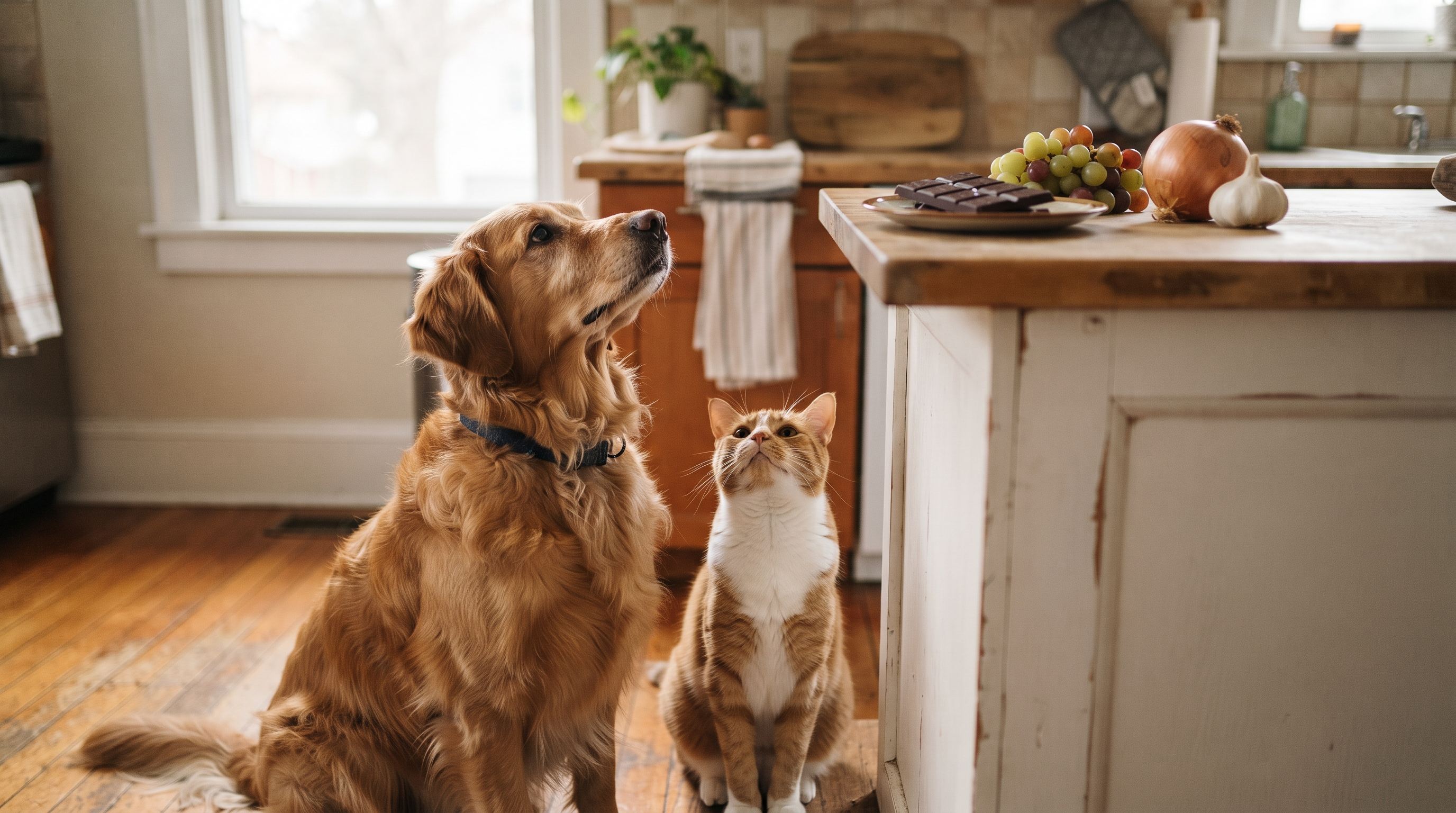
Some of the most common foods sitting in your kitchen right now can be dangerous, even deadly, to dogs and cats. Pets don't process food the way we do, and a snack that's completely harmless for a person can cause serious illness in an animal a fraction of our size. Here is the complete list every pet owner should know, and what to do if your pet eats something they shouldn't.
Chocolate, Coffee, and Anything with Caffeine
Chocolate contains theobromine and caffeine, both of which dogs and cats metabolize far more slowly than humans do, allowing the compounds to build up to toxic levels. Baking chocolate and dark chocolate are the most dangerous since they're the most concentrated, but even a modest amount of milk chocolate can cause vomiting, diarrhea, a racing heart, tremors, or seizures depending on your pet's size. Coffee grounds, tea bags, and energy drinks carry the same risk and should be kept well out of reach.
Grapes and Raisins
Grapes and raisins can cause sudden kidney failure in dogs, and the exact toxic mechanism still isn't fully understood by veterinary researchers — which means there's no known "safe" amount. Even a few grapes, or raisins baked into a trail mix or granola bar, have caused serious poisoning in some dogs while leaving others unaffected, so it's not worth the risk either way. Cats are less commonly reported but are treated with the same caution.
Onions, Garlic, Leeks, and Chives
Every member of the allium family — onions, garlic, leeks, shallots, and chives — contains compounds that damage red blood cells and can lead to anemia. Cooking does not neutralize this risk, so table scraps with onion or garlic powder (broths, gravies, baby food, and seasoned meats are common culprits) are just as dangerous as the raw vegetable. Cats are especially sensitive, but dogs are also at real risk, particularly from concentrated powdered forms.
Xylitol (Found in Sugar-Free Gum, Candy, and Peanut Butter)
Xylitol is a sugar substitute used in sugar-free gum, mints, candy, some peanut butters, and baked goods. In dogs, it triggers a rapid, dangerous drop in blood sugar and can cause liver failure — sometimes from a single piece of gum. Always check the ingredient label on peanut butter before giving it to your dog as a treat, since more brands have started using xylitol in recent years.
Alcohol and Raw, Unbaked Dough
Alcohol affects pets much the same way it affects people, but at a fraction of the amount, and can cause dangerously low blood sugar, blood pressure, and body temperature. Raw bread dough is a separate but related danger: it continues to rise in the warmth of your pet's stomach, and the yeast produces alcohol as a byproduct — a combination that can cause both a life-threatening bloat and alcohol toxicity at once.
Macadamia Nuts
Macadamia nuts are specifically toxic to dogs, even though the exact cause isn't fully known. Symptoms — weakness, vomiting, tremors, and a mild fever, usually in the hind legs first — typically show up within 12 hours of eating them. Most dogs recover with supportive veterinary care, but it's still worth an immediate call to your vet rather than waiting to see if symptoms appear.
Avocado
Avocado contains a compound called persin, which is most dangerous to birds and some livestock but can still cause vomiting and diarrhea in dogs and cats in larger amounts. The bigger everyday hazard is usually the pit itself, which is a serious choking and intestinal blockage risk if swallowed, regardless of any toxicity concern.
Milk and Dairy Products
Most adult dogs and cats are lactose intolerant, having lost much of the enzyme needed to digest milk sugar after weaning as kittens and puppies. A small lick of ice cream isn't an emergency, but regular milk, cheese, or cream can lead to vomiting, gas, and diarrhea — worth remembering the next time your cat begs for a saucer of milk, which is more myth than safe treat.
Cooked Bones and Fatty Table Scraps
Cooked bones — from chicken, turkey, pork, or fish — become brittle and can splinter, leading to choking, mouth and throat injuries, or a life-threatening intestinal blockage or perforation. Fatty trimmings, skin, and drippings, especially around the holidays, are a common trigger for pancreatitis, a painful and sometimes serious inflammation of the pancreas. Raw bones carry less splintering risk but come with their own bacterial concerns, so check with your vet about what's appropriate for your pet.
What to Do If Your Pet Eats Something Toxic
Call your veterinarian or an animal poison control hotline immediately rather than waiting for symptoms to appear — treatment is far more effective before a pet becomes visibly sick. The ASPCA Animal Poison Control Center (888-426-4435) and the Pet Poison Helpline (855-764-7661) are both staffed 24/7 by veterinary professionals, though a consultation fee may apply. Have the food involved, the approximate amount eaten, and your pet's weight ready when you call. Do not induce vomiting unless a vet specifically instructs you to, and if your pet collapses, has a seizure, or has trouble breathing, go to an emergency vet right away instead of waiting on the phone.
Keeping this list in mind, and keeping these foods reliably out of reach, is the simplest way to avoid a frightening emergency vet visit. When in doubt about any food, the safest answer is always to check with your vet before sharing it.