A microchip is one of the simplest ways to get a lost dog or cat back, and one of the most misunderstood. It isn't a tracker, it doesn't hold your address, and on its own it does nothing at all. A chip carries a single ID number. Whether that number leads a shelter or vet back to you depends entirely on a record you keep in a registry, and that record is the part most owners never finish or never update. Here's how chips actually work, what getting one involves, and how to make sure yours does its job on the day it matters.
1. What a Microchip Is (and What It Isn't)
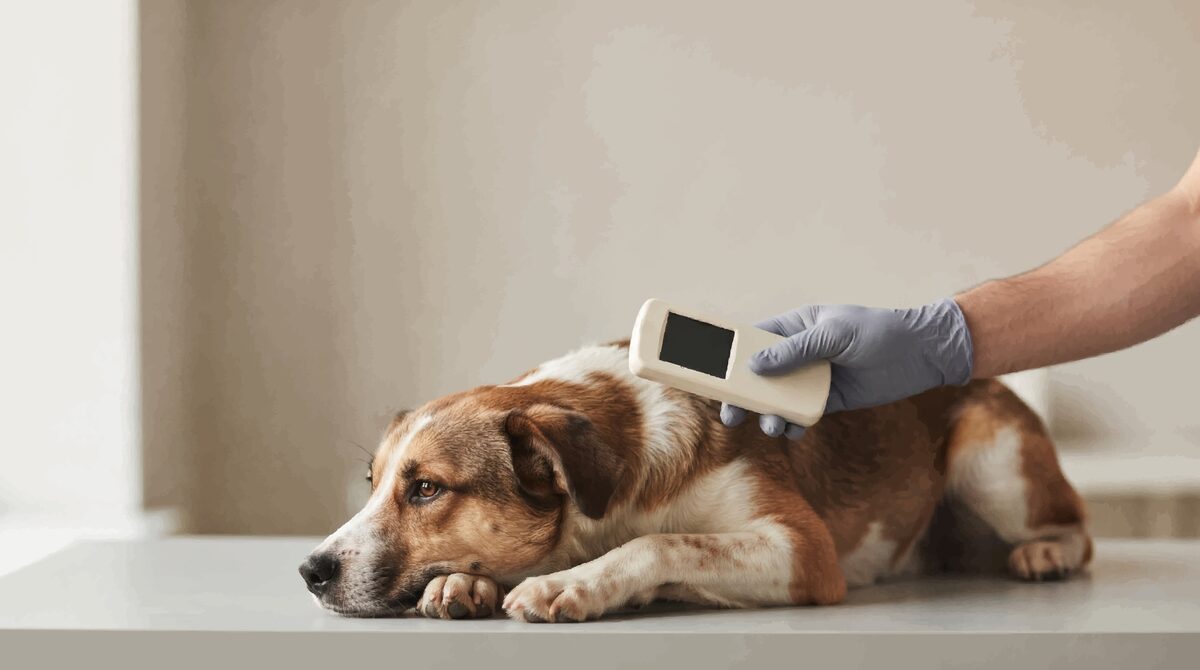
A pet microchip is a tiny glass capsule, about the size of a grain of rice, placed under the skin, usually between the shoulder blades. It has no battery and no moving parts. It sits there doing nothing until a scanner passes over it. The scanner sends out a weak radio signal, the chip uses that signal to reply with its ID number, and the number appears on the scanner's screen.
A few things a microchip does not do:
- It can't show where your pet is. A chip has no GPS and no way to send a signal on its own. It only answers when someone holding a scanner is right next to your pet.
- It doesn't store your name or phone number. The chip holds only its number. Your contact details live in a separate online registry, linked to that number.
- It doesn't replace a collar and tag. A neighbor who finds your dog can read a tag on the spot. Reading a chip means a trip to a vet or shelter with a scanner.
That's why the chip is only half of the system. The other half, the registry record, is what turns a number into a phone call.
2. Getting Your Pet Chipped: Cost and What to Expect
Many pets already have one. Most shelters and rescues microchip dogs and cats before adoption, and the cost is usually included in the adoption fee. If you adopted, check your paperwork for a chip number before booking anything.
If your pet isn't chipped, any vet can do it, often during a routine visit. The chip goes in through a needle, much like a vaccination. It takes seconds and most pets react about the same as they would to any other shot, so no anesthetic is needed, though some owners choose to have it done during a spay or neuter while the pet is already asleep.
- Cost: a vet clinic typically charges somewhere around $25 to $75, depending on your area. Some shelters and animal services run low-cost chip clinics for less.
- Age: puppies and kittens can be chipped young. Ask your vet when they recommend it.
- Safety: problems are uncommon. Occasionally a chip moves a little from where it was placed, which is why it's worth having it checked now and then (see section 4).
Indoor cats need chips too. Indoor cats often get out through an open door, a torn screen or during a move, and because they've never been outside, they're usually frightened and hide when they do. Our guide to finding a lost cat explains why. A cat with no collar and no chip is very hard to match to an owner.
3. Registering the Chip: The Step Most People Miss
A chip that isn't registered is a dead end. A shelter can scan your pet, see the number, look it up, and find nothing, or find a record that still lists the clinic that implanted it. Implanting the chip and registering it are two separate steps, and the second one is often left to the owner.
To register:
- Find the chip number. It's on your adoption papers, the vet's invoice, or a sticker that came with the chip. If you can't find it, any vet or shelter can scan your pet and tell you.
- Find out which company made the chip. Most chip numbers can be checked with the free AAHA Universal Pet Microchip Lookup tool online, which shows which registry the number is linked to.
- Register with that company, and consider adding the number to a second registry too. Shelters usually check more than one.
- Add more than one contact. Include a second phone number, such as a partner, family member or friend, in case you can't be reached.
About fees: some registries are free, and some charge a one-time fee or offer paid plans with extras. You don't need a paid plan for the chip to work. What matters is that your contact details are on file and correct.
4. Keep Your Details Up to Date
A registry record with an old phone number is almost as useless as no record. People move, change carriers, and drop landlines, and the chip record is easy to forget. Update it whenever:
- You move, even within the same town.
- Your phone number or email changes.
- Your pet goes to someone else, temporarily or for good (see section 5).
Ask your vet to scan the chip at each yearly checkup. It takes a few seconds, confirms the chip still reads, and confirms it's still where a shelter would expect to find it. While you're there, log in to the registry and check the details are still right. Many owners put a reminder in their phone for the same day each year.
5. Adopted or Rehomed a Pet? Check Whose Name Is on the Chip
When a pet changes homes, the chip doesn't know. If the record isn't transferred, a scan will lead to the shelter, the rescue, or the previous owner, not to you.
- Adopting from a shelter or rescue: ask whether they register the chip in your name or whether you need to do it. Our guide to adopting from a shelter covers what else to ask on adoption day.
- Taking in a pet from a private owner: ask for the chip number and ask them to transfer the record to you. Most registries have a transfer process that needs the current owner to agree.
- Rehoming your own pet: pass on the chip number with the vet records, and transfer the registration on the day you hand them over. Our guide to rehoming a pet the right way lists everything else worth sending with them.
6. What Happens When a Found Pet Is Scanned
If someone finds a dog or cat and takes it to a vet clinic or animal shelter, staff will usually scan it for a chip, generally for free. Here's what happens next:
- The scanner shows a number. Most clinics and shelters use universal scanners that read the common chip types.
- Staff look the number up to find which registry holds the record.
- The registry contacts the owner, or passes the owner's details to the shelter or vet, depending on how that registry works.
Found a pet yourself? Getting it scanned is one of the first and most useful things you can do. Our guide to finding a stray dog or cat walks through the rest. If there's no chip, or the record leads nowhere, you can report the found pet so the owner has another way to find it.
A chip record is also useful if your pet ends up at a shelter. Shelters generally hold strays only for a short time before they can be adopted out, and a working chip can mean a call within hours. A registry record in your name is also good supporting proof when you go to collect your pet, alongside vet records and photos. See our guide to getting your pet back from a shelter for what to bring.
7. If Your Pet Goes Missing
A chip helps only once someone scans it, so don't wait for that call. As soon as you realize your pet is gone:
- Call the registry or log in and mark your pet as lost. Some registries alert nearby shelters and vets, and it flags the record if the chip is scanned.
- Check your contact details are right while you're there. This is the moment an old number costs you.
- Call and visit your local shelters, and give them the chip number along with photos and a description.
- Search and spread the word the usual way. Our guide to finding a lost dog has a full plan, and you can report your lost pet so neighbors who see it know who to call.
Once your pet is home, mark them as found with the registry so the record is clear for next time.
8. Chips, Collars and Trackers: Use All Three
A microchip is permanent ID that can't fall off, but it isn't the fastest way home. Each type of ID covers a different gap:
- A collar with an ID tag is the quickest. Anyone who finds your pet can read it and call you from the sidewalk, with no scanner needed. Put your phone number on it, and for cats, use a breakaway collar that releases if it snags.
- A microchip is the backup for when the collar comes off, which it often does.
- A GPS tracker on the collar is the only one of the three that can show you where your pet is right now. It needs charging and, usually, a subscription, and it's gone if the collar is. It's worth considering for dogs who bolt or cats who roam.
If you've just brought a new pet home, add ID to your first-week list. Our guide to your first week with a new cat covers the rest of the setup.
Lost or Found a Pet? Start Here
If a pet has gone missing or turned up at your door, a chip scan is only one of the ways back. On AnimalShelter.net you can post a lost or found pet report. It appears on the lost and found pages for your area, where neighbors searching for a pet will see it. You can also find the shelters and rescues near you, so you know which ones to call and which to visit in person.