Holidays are good for people and hard on a lot of pets. The front door opens and closes all day, the house fills with new voices and smells, and the usual walks and meal times slip. Most pets cope fine with a little planning, but busy doorways are exactly how a calm house cat or a friendly dog ends up outside and lost. This guide covers what to sort out before guests arrive, how to set up the house, what to tell your visitors, and what to do straight away if your pet gets out anyway.
1. Why a Busy House Is Risky for Pets
Nothing about a holiday gathering is dangerous on its own. It's the combination that catches pets out:
- Open doors: guests arriving, people stepping out for air, someone carrying dishes to the car. Each one is a chance for a pet to slip past legs.
- People who don't know your rules: a guest won't know your cat bolts for the door or that your dog isn't allowed in the yard alone.
- Noise and crowding: a nervous pet looking for somewhere quiet may head for the nearest exit rather than their bed.
- A broken routine: late meals and skipped walks leave dogs restless, and restless dogs look for their own entertainment.
Indoor cats are easy to forget here. A cat who has never been outside often panics once they are, and hides silently close to home instead of coming back. Our guide to finding a lost cat explains why that search is so different from looking for a dog.
2. Check Your Pet's ID Before Anyone Arrives
Do this a few days ahead, not on the morning itself. If your pet does get out, ID is what gets them home from a stranger's porch or a shelter.
- Collar and tag: make sure the collar fits (two fingers underneath) and the tag shows a phone number you will actually answer that day. Cats should wear a breakaway collar.
- Microchip: check that the chip is registered and the phone number on it is current. A chip with old details can't bring a pet home. Our guide to pet microchips explains how to look up and update yours.
- A recent photo: take a clear, well-lit photo of your pet's face and one of their whole body, side on. If you ever need to post about them, you'll have it ready.
3. Set Up a Quiet Room
The single most useful thing you can do is give your pet a room of their own for the busiest hours. A spare bedroom, a home office or a laundry room all work, as long as it's away from the front door.
- Make it comfortable: their bed, water, a few toys, and a litter box for cats. A worn T-shirt of yours helps too.
- Settle them in early: put your pet in before the first guest arrives, not once the house is already loud.
- Mask the noise: a radio, a fan or soft music covers doorbells and laughter.
- Mark the door: a simple note such as "Pet inside, please keep closed" stops a guest looking for the bathroom from opening it.
- Check in: visit every hour or so, and give dogs a short leashed bathroom break when the doorway is quiet.
Some sociable dogs genuinely enjoy company. That's fine, but they can still spend the arrival rush in their room and come out once everyone is inside and the door is shut. The same quiet room helps on New Year's Eve, when fireworks frighten many dogs and cats.
4. Control the Front Door
Most holiday escapes happen at the door, so this is where a few small habits pay off.
- Leash or carry at arrivals: if your pet is out and about, put dogs on a leash and keep cats shut in a room while people are coming and going.
- Add a second barrier: a baby gate across the hallway gives you a buffer even when the front door is open.
- Pick a door person: one household member answers the door each time and checks where the pet is first.
- Watch the side doors: the back door, the garage door and the yard gate get forgotten when people step out to smoke, take a call or fetch something from the car.
- Do a check after the last guest leaves: make sure your pet is actually inside before you lock up for the night.
5. Brief Your Guests (Especially Kids)
Most guests are glad to help if they know what you need. A short word as they arrive covers it:
- Doors: "Please close the door behind you, the cat likes to run out."
- Food: "Please don't feed the dog anything, even if he begs."
- The quiet room: "The dog is resting in the back room, please leave that door shut."
Visiting children need a bit more. Kids who don't live with pets may not read the signs that a dog or cat has had enough. Ask them to let the pet come to them, not to pick up cats or hug dogs, and to leave the pet alone while it's eating or resting. Keep an adult nearby whenever children and pets are together, and give the pet an easy way out of the room.
Signs a pet is stressed include hiding, pacing, panting when they aren't hot, yawning, lip licking, a tucked tail, and flattened ears. When you see them, move your pet to their quiet room for a break.
6. Food, Trash and Decorations
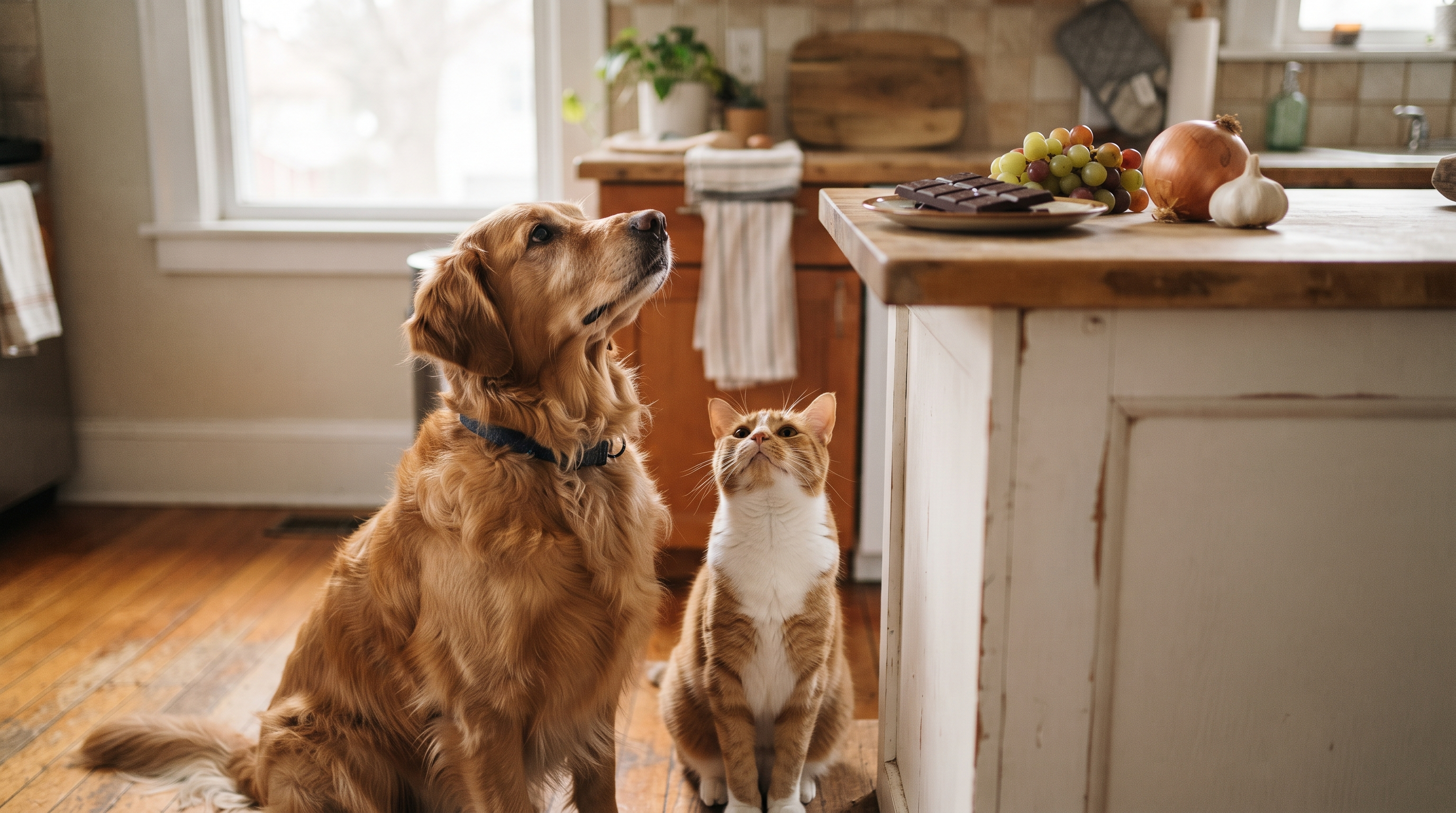
Holiday tables hold several foods that are dangerous to dogs and cats, and plates get left at nose height. Our list of toxic foods for dogs and cats covers them in detail. A few other hazards are easy to miss:
- The trash: cooked bones, fat trimmings, foil and string from roasts end up in the kitchen bin. Use one with a lid, or take bags straight outside.
- Ribbon, tinsel and string: cats love to play with these, and swallowed string can cause serious harm. Keep them picked up and out of reach.
- Plants: lilies are very dangerous to cats, even in small amounts. Holly and mistletoe can also make pets ill. Keep them out of reach, or choose artificial ones.
- Candles: a wagging tail or a curious cat can knock one over. Keep lit candles up high and never leave them alone with a pet in the room.
- Guests' bags: coats and handbags often hold medication, sugar-free gum or snacks. Put them in a closed room rather than on the floor.
If you think your pet has eaten something harmful, call your vet or an emergency vet straight away. Don't wait for symptoms, and don't try to make your pet vomit unless a vet tells you to.
7. Traveling or Staying Away With Your Pet
If you're the one visiting, your pet is in a place they don't know, which makes them more likely to bolt and less likely to find their way back.
- Put your cell number on the tag: a home landline is no help when you're three states away.
- Use a carrier or a leash for every move: between the car, rest stops and the house, never let a cat or dog loose in an unfamiliar place.
- Ask your hosts about their doors and yard: check the fence for gaps before letting a dog out alone.
- Bring familiar things: their bed, bowls and usual food make a strange house feel safer.
- Know the nearest emergency vet: look it up when you arrive, not when you need it.
If your pet stays home with a sitter or at a boarding kennel, leave written instructions, your vet's number and the door rules above.
8. If Your Pet Gets Out
Act straight away. The first hours matter most, and a pet in an unfamiliar or noisy area may not come when called.
- Search close by first: cats usually hide very near home, under porches, decks and parked cars. Dogs may run further, so send people in different directions.
- Ask guests to help, calmly: shouting and chasing can push a frightened pet further away. Call their name in a normal voice and shake a treat bag.
- Leave something familiar out: their bed or a worn piece of your clothing by the door.
- Call local shelters and animal control: let them know your pet is missing, and check in person if you can.
- Post about them: use the photo you took earlier, the area they went missing and your phone number.
Our step-by-step guides for a lost dog and a lost cat go through the search in detail, and if your pet ends up at a shelter, our guide to getting your pet back from a shelter explains what to bring.
Help Near You This Holiday Season
If your pet goes missing, you can report a lost pet on AnimalShelter.net. Your post appears on our lost and found pages for your city and state, where neighbors and people who have found a pet can see it. If a dog or cat turns up at your door while you're hosting, you can report a found pet for free, and our guide to finding a stray dog or cat covers what to do while you look for the owner.
Either way, it helps to know where your local shelters are before you need them. Find animal shelters and rescues near you, and keep their numbers handy for the holidays.