Rehoming a cat is not the same job as rehoming a dog. Cats are attached to places as much as people, they often hide from strangers, and a move can unsettle them for weeks. None of that means it can't go well. It means the details matter more: the right home, a calm handoff, and a new owner who knows what to expect. This guide covers the parts that are specific to cats, from writing about your cat honestly to the first few weeks in their new home.
If you haven't yet decided whether rehoming is the right step, start with our general guide to rehoming a dog or cat the right way, which covers ruling out other options and screening adopters. This article picks up from there.
1. Why Rehoming a Cat Is Different
A few things about cats shape every step that follows:
- Territory matters: your home is your cat's whole world. Moving to a new one is stressful even when the new people are lovely.
- First impressions mislead: a cat who hides under the bed when a visitor arrives may be the most affectionate cat in the house once settled. Adopters need to know this.
- Litter habits can slip: stress, a different litter or a box in the wrong spot can lead to accidents, which are one of the most common reasons a cat is sent back.
- Escape risk is high: a cat in a new place may slip out a door and try to get back to somewhere familiar. An indoor cat outside for the first time often hides and stays silent.
Planning for these from the start is what makes the difference between a smooth move and a cat who comes back to you a month later.
2. Give Yourself Time
Start as early as you can. A few weeks gives you time to find a good match instead of accepting the first person who replies. If you know a move, a new baby or a change in your health is coming, begin before it arrives rather than once you're under pressure.
If you truly have only days, say so honestly to anyone you talk to, and ask friends or family whether they can foster your cat for a short time while you keep looking. Our guide to surrendering a pet to a shelter also explains how shelter intake works and what to ask, if you need to weigh that option too.
3. Gather Your Cat's Records
A cat with clear paperwork is easier for an adopter to say yes to, and it saves the new owner an unnecessary vet visit. Collect these before you post:
- Vet records: vaccinations, any recent checkups, and the name and number of your vet. Ask the clinic for a printed or emailed copy.
- Spay or neuter: note whether your cat is fixed. Most adopters will ask, and an unfixed adult cat may spray or try to get outside.
- Health conditions and medication: list anything ongoing, such as a special diet, thyroid medication or a sensitive stomach, along with the dose and cost.
- Microchip: find your cat's chip number. Once the cat goes to their new home, the chip registration should be moved to the new owner's details. Our guide to pet microchips explains how to look up the registry and transfer it.
4. Write About Your Cat Honestly
The goal of a good post is not to get the most replies. It's to get replies from the people who are right for your cat. Be specific and be honest, including about the less charming parts.
- Personality: lap cat or independent? Chatty or quiet? How do they act with strangers, and how long do they take to warm up?
- Other animals: say whether they have lived with other cats or with dogs, and how it went. "Fine with a calm older dog" is more useful than "good with dogs".
- Children: some cats love busy homes, others need a quiet adult household. Say which your cat prefers.
- Indoor or outdoor: say clearly whether your cat has always lived indoors, goes outside, or has a mix of both.
- Litter habits: the type of litter they use, how many boxes you have, and any history of going outside the box.
- Quirks: scratching furniture, waking you at 5am, hating being picked up. Telling people now avoids a return later.
Photos make a big difference. Take several in daylight near a window: one clear shot of their face at their eye level, one of their whole body, and one of them relaxed at home, such as curled up on a chair or playing. Avoid photos of a cat in a carrier, which tend to look stressed.
5. Questions to Ask a Possible New Home
A short phone or video chat before anyone visits tells you a lot. These questions are specific to cats:
- Will the cat live indoors? An indoor-only cat should not go to a home planning to let them roam. If the adopter plans to let the cat out, ask how and when.
- Is the home allowed to have cats? If they rent, ask whether the lease allows pets. Housing changes are one of the most common reasons cats are given up.
- Who else lives there? Other cats, dogs and children all affect how your cat will settle. Ask how they would introduce your cat to any pets already there.
- Have they had a cat before? A first-time owner can be a great home, but they may need more guidance about hiding, litter and scratching.
- What are their plans for vet care? Ask whether they have a vet in mind, especially if your cat is older or needs regular medication.
- How do they feel about scratching? If someone plans to declaw, that's a reason to keep looking. Ask instead whether they have scratching posts or are happy to get some.
A modest rehoming fee also helps you find people who are serious and prepared to pay for a cat's care. Our general rehoming guide explains why.
6. Bonded Pairs, Senior Cats and Shy Cats
Some cats need a little more thought:
- Bonded pairs: two cats who groom each other, sleep together and look for each other are best placed together. Splitting them can cause stress, hiding and litter problems in both cats. Say clearly in your post that they go as a pair.
- Senior cats: older cats are often calm and easy to live with, which suits plenty of households. Share their health history in full, and point out that they are past the kitten stage of climbing curtains.
- Shy cats: describe how long your cat took to trust you, and what helped. A patient, quiet adult home is often a better fit than a lively family, and an adopter who knows to expect weeks under the bed is far less likely to give up.
7. The Handoff: Carrier, Litter and a Safe Room
Moving day is where a lot of the stress happens, so plan it carefully.
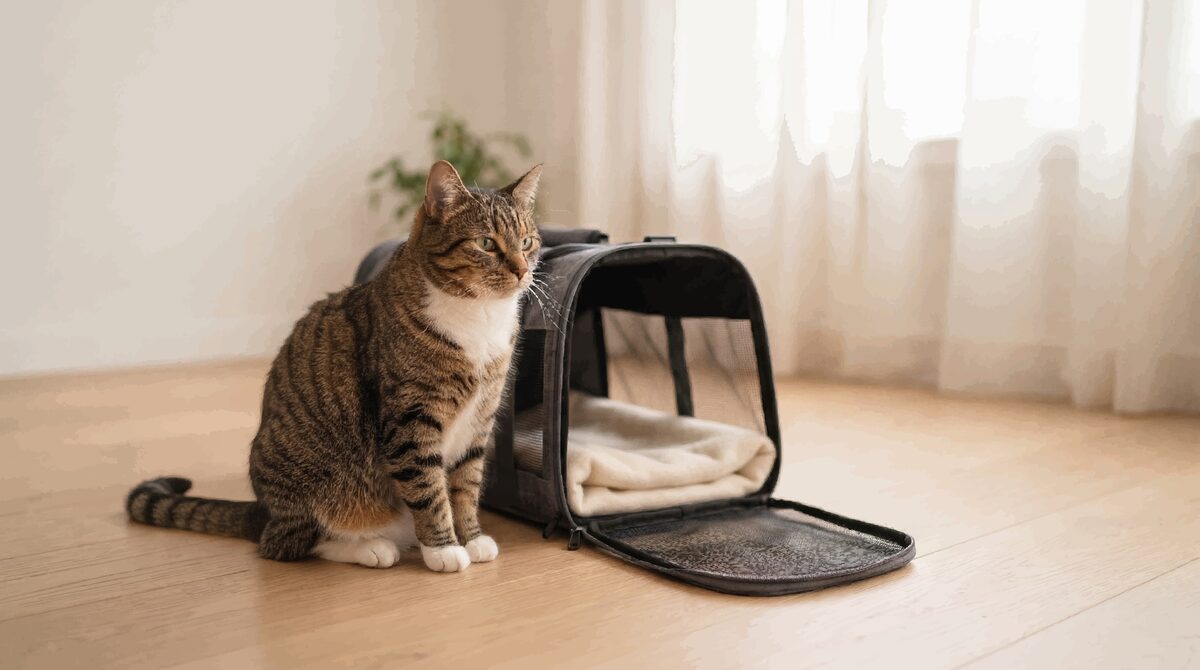
- Use a secure carrier: never carry a cat loose in your arms between a house and a car. A frightened cat can wriggle free in a second. Put a towel that smells of home inside the carrier.
- Send the same litter and food: pack the litter your cat already uses and a small bag of their usual food, plus a scoop of used litter. A sudden change to either is a common cause of accidents and upset stomachs.
- Send familiar things: their bed, a blanket, a favorite toy and their scratching post if you can spare it. Familiar smells help a cat settle.
- Ask for a safe room: the new owner should set up one quiet room with litter, food, water and a hiding spot, and keep the cat there for the first few days before they explore the rest of the house.
- Write a care note: feeding times and amounts, litter type, medications, the vet's number, and the little things that calm your cat down.
Keep the goodbye short and calm. Let the cat stay in the carrier until the new owner opens it in the safe room, and let them come out in their own time.
8. The First Few Weeks in the New Home
Tell the new owner that hiding is normal. Many cats spend the first few days, sometimes longer, under a bed or behind a sofa. They may eat very little at first and only come out at night. This is a cat getting used to new surroundings, not a sign that the match is wrong. Our guide to the first week with a new cat is a useful thing to send them.
- Doors and windows: ask them to be extra careful at the front door for the first few weeks. A cat who gets out in an area they don't know may hide close by and stay silent. If it happens, our guide to finding a lost cat explains where to look.
- Eating and litter: if a cat hasn't eaten at all for more than a day, or seems to be straining in the litter box, the new owner should call a vet. Cats can become ill quickly when they stop eating.
- Check in once: a friendly message after a week or two is fine. Keep it light, and respect that it's their cat now.
- Agree on a plan if it doesn't work out: ask the new owner to contact you first if they can't keep the cat, rather than passing them on to someone else.
Post Your Cat Near You
When you're ready, you can post your cat for rehoming on AnimalShelter.net. Your post appears on the cat adoption pages for your city and state, alongside cats from local rescues, and goes into our weekly adoption email to people in your city. You read every message yourself and choose who to meet, so you stay in control of where your cat goes.
If you're on the other side and looking for a cat, you can browse cats for adoption near you, or find animal shelters and rescues in your area.