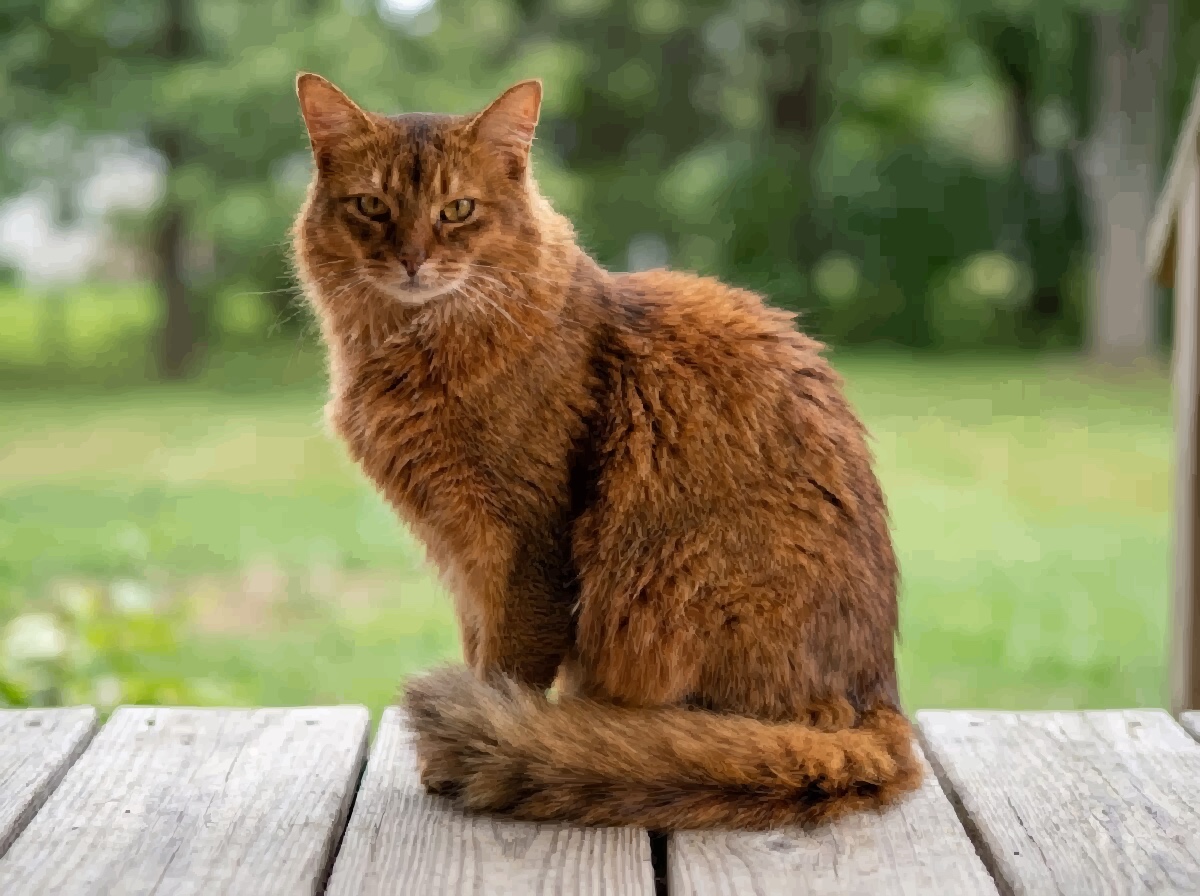
About the Somali
The Somali is the long-haired form of the Abyssinian. Longhaired kittens occasionally appeared in Abyssinian litters, likely from a recessive gene carried in the breed's lines, and for years they were quietly placed as pets. In the 1960s and 1970s breeders in the United States, notably Evelyn Mague, began developing them on purpose and gave them the name Somali. The breed gained championship status with the Cat Fanciers' Association in 1978.
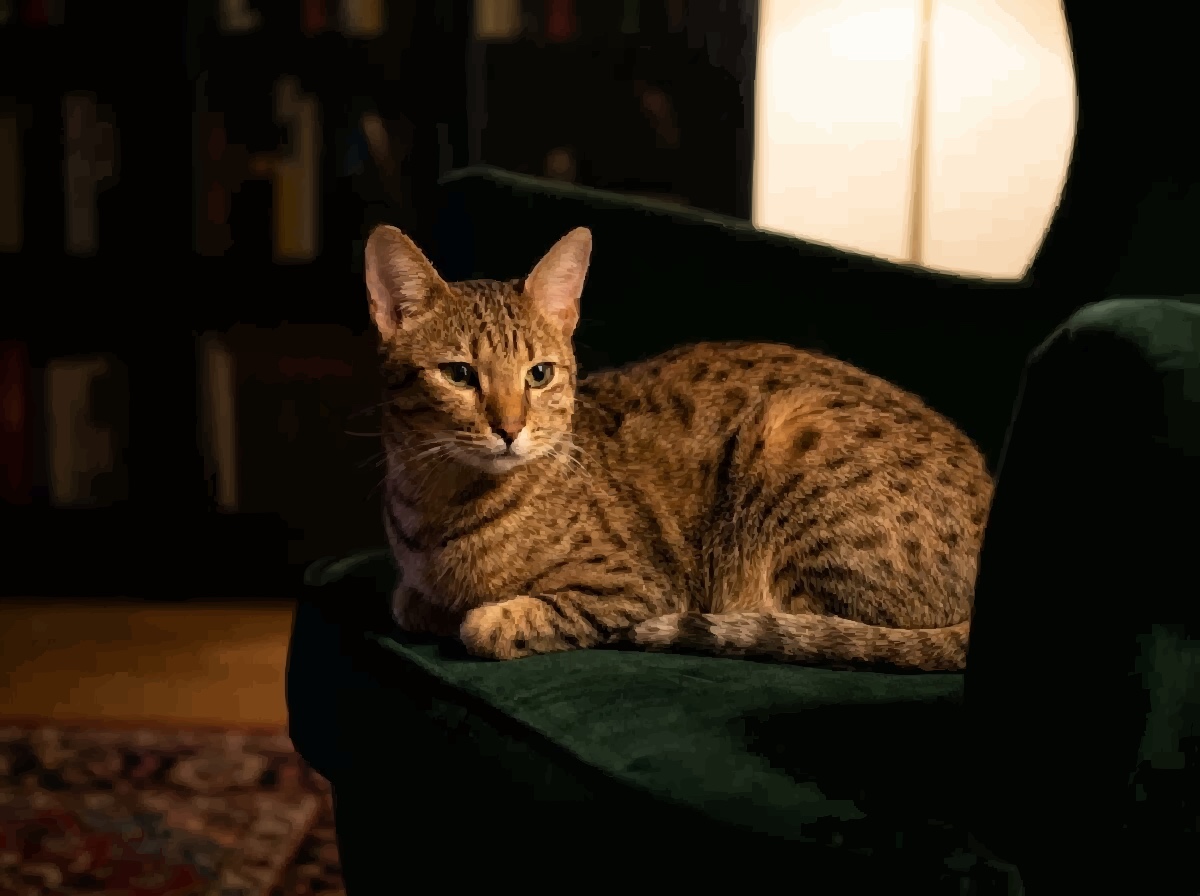
Somalis are medium-sized, lithe and muscular, with a slightly rounded wedge-shaped head, large ears and almond-shaped eyes in gold or green. The coat is medium length, soft and fine, with a ruff at the neck, breeches on the hind legs and a full, bushy tail that has earned the breed the nickname fox cat. Each hair is ticked with several bands of color, which gives the coat a warm, glowing look. Despite its length, the coat tends not to mat easily, and brushing once or twice a week usually keeps it in good shape.
Like the Abyssinian, the Somali tends to be lively, curious and playful, and it often stays active well into adulthood. Many enjoy climbing, games and puzzle toys, and they usually want to be part of the household's routine rather than sit on the sidelines. They suit people who enjoy an interactive cat. Health issues known in Abyssinian lines, such as pyruvate kinase deficiency and a form of progressive retinal atrophy, can also appear in Somalis, and DNA tests exist for both. Regular dental care is also worth keeping up.