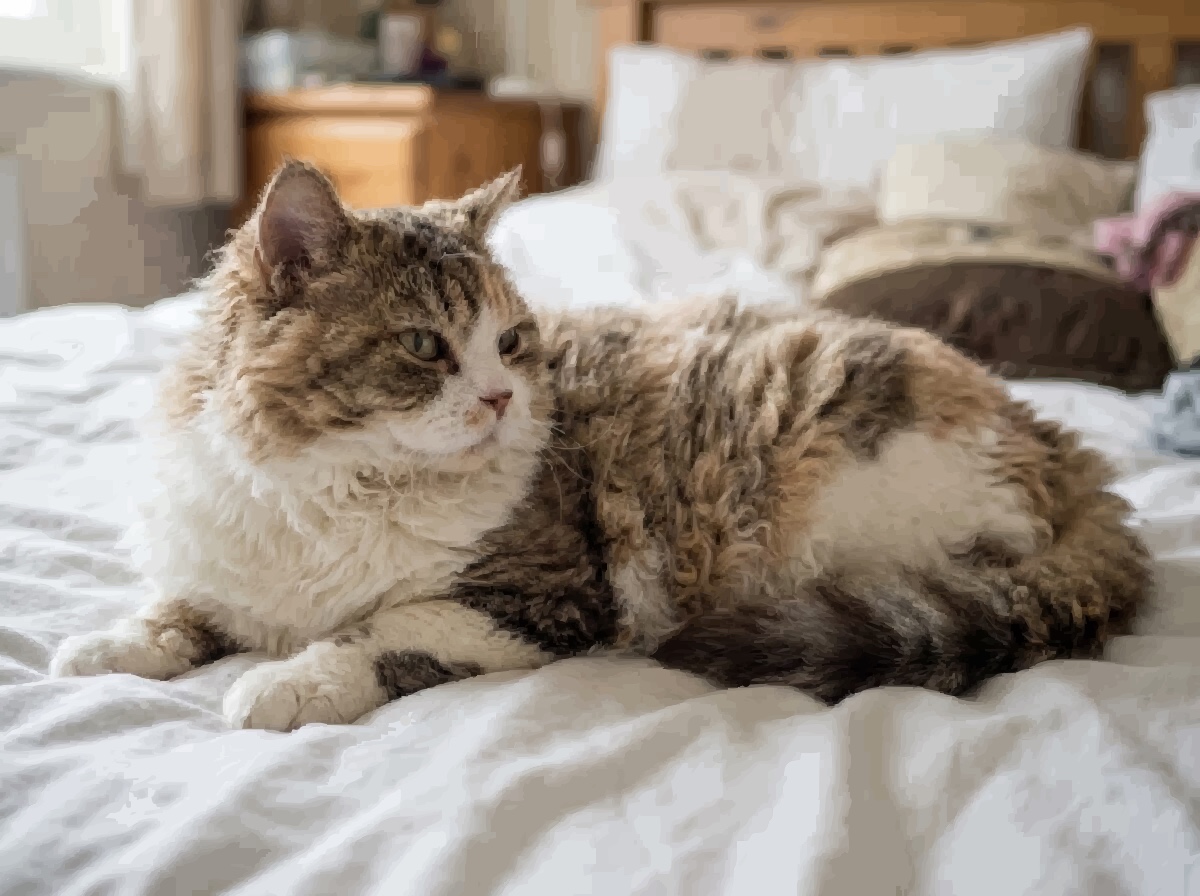
About the Selkirk Rex
The Selkirk Rex began in Montana in 1987, when a curly-coated kitten was born in a shelter litter. Breeder Jeri Newman took in the kitten, named Miss DePesto, and bred her to a black Persian, producing more curly kittens and showing that the curl came from a dominant gene. Unlike the Cornish and Devon Rex, which carry recessive curl genes, the Selkirk can pass on its curls with only one parent carrying the trait. The breed is recognized by the major registries, but it is rare in the US.
Selkirks are medium to large, heavy-boned cats with a rounded, cobby body and a round head, close to the British Shorthair in shape. The coat, which can be short or long, falls in loose, soft curls or waves, including the whiskers, and some kittens go through a stage of straighter fur before the curl returns. Not every kitten inherits the curl. Brushing too hard can loosen the curls, so gentle combing once or twice a week works best, and occasional baths help the curl look defined.
Most Selkirk Rex cats are relaxed, tolerant and affectionate, often called clownish and enjoying play while still liking to curl up in a lap. They tend to do well with children, other cats and friendly dogs and adapt well to apartments. Because Persian, British Shorthair and Exotic Shorthair lines were used as outcrosses, polycystic kidney disease and hypertrophic cardiomyopathy are known risks, so breeders should screen for both. Ear wax buildup is also common and calls for regular ear checks.