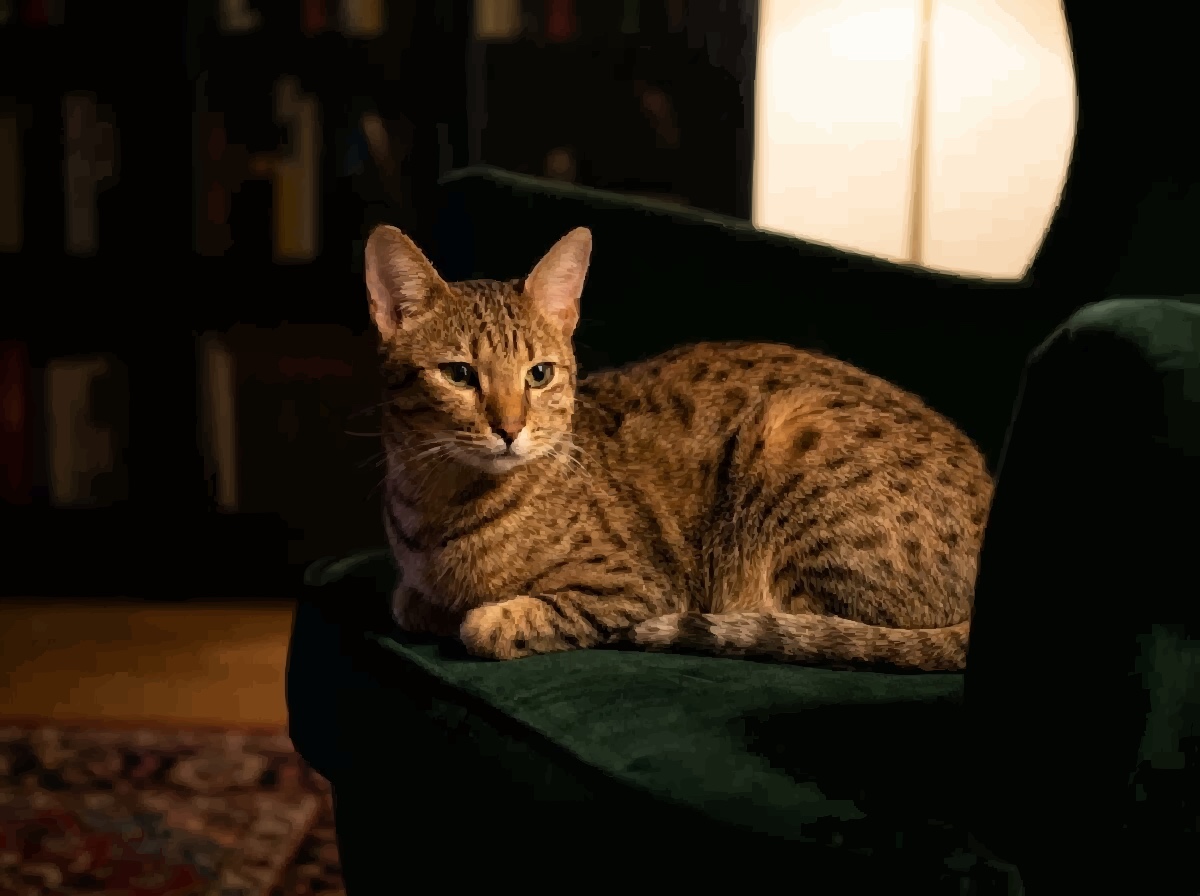
About the Serengeti
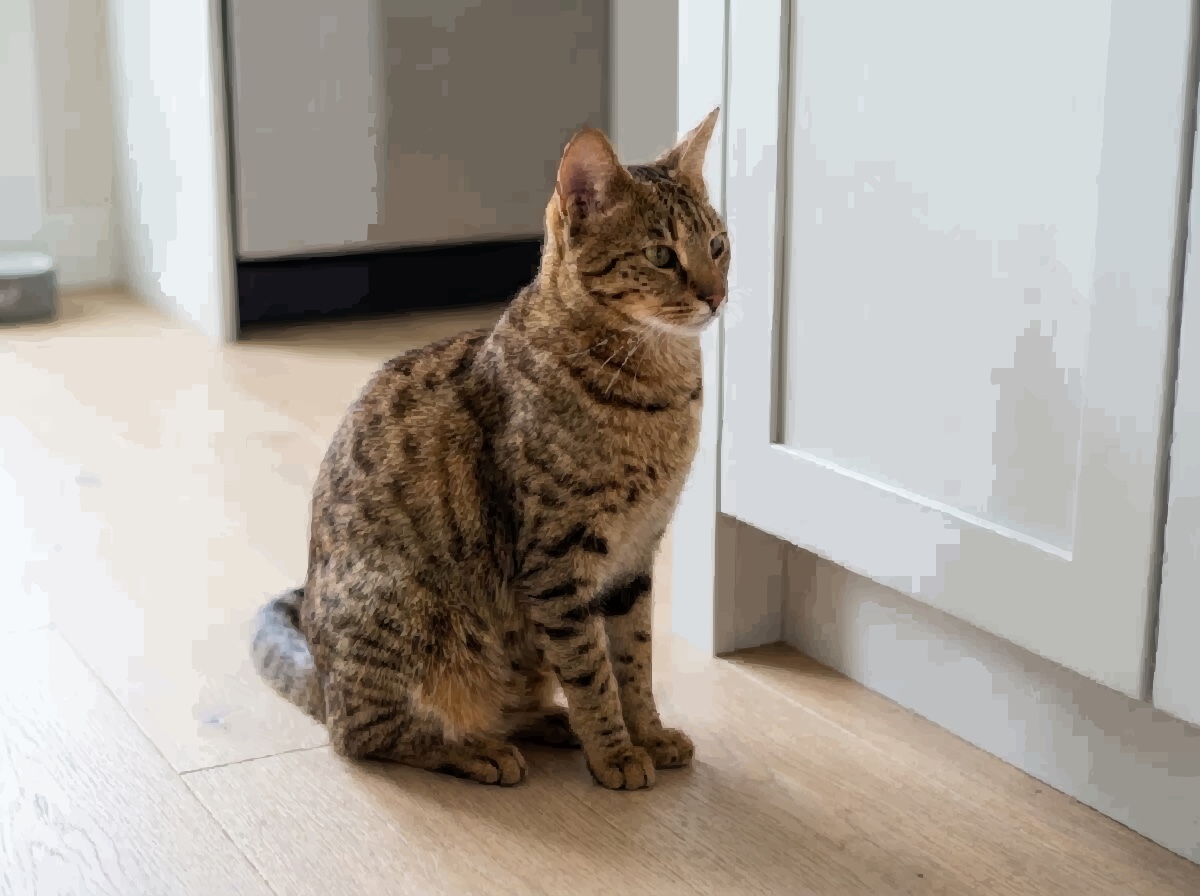
Created in California in 1994 by Karen Sausman, the Serengeti was bred to look like a serval without using any wild cat. Sausman crossed Bengals with Oriental Shorthairs, aiming for a tall, spotted cat with large ears and a long neck, and other breeders have since joined the program. The breed is still developing and is not recognized for championship status by every registry. It is very rare in the US, and adopters are unlikely to find one outside a small number of breeders.
Serengetis are medium-sized and lean but muscular, with long legs, a long neck and strikingly large, upright ears set on a fairly small head. The short, close-lying coat shows bold, well-separated spots on a golden, tan or silver background, and solid black and smoke cats also occur, sometimes with faint "ghost" spotting visible in sunlight. Eyes are round and usually gold or green. The coat needs little care beyond a weekly brushing or wipe-down.
The breed is often described as energetic, outgoing and talkative, drawing on its Bengal and Oriental background. Serengetis tend to be confident with visitors and enjoy climbing, chasing toys and being involved in daily activity. They usually fit active households with older children and other playful pets, and they can live in apartments if given vertical space and daily play. Because the breed is so small and new, little breed-specific health data exists, so asking a breeder about screening for conditions seen in Bengals and Orientals, such as heart and eye disease, is sensible.